Positivity: The dark side of seeing how wonderful everything is (and how to lead with it) 

Positivity

At its best, Positivity brings a kind of warmth that changes the feel of everything. It lifts the tone in a room, helping people keep going when things feel heavy, and spotting possibility just when others are losing sight of it. It’s as quick to notice progress as it is outcomes, building connection through genuine encouragement and energy. This is the glue in hard moments—and the spark when things start to feel flat. 

The way Positivity shows up was captured brilliantly by two postdoctoral fellows I was having a coffee with. One of them had just come back from visiting her new university, and she was describing how wonderful it all was—how lovely the people were, how welcoming everything felt. Her colleague just laughed and said, “You think everywhere is wonderful because people see how wonderful you are.” He went on to explain: “You walk into a coffee shop and the barista says, ‘Your usual?’ I’ve been going to the same place, with the same person, for a year—and when he sees me, he just says, ‘What do you want?’” Then she added, “You’re like the Queen who thinks everywhere smells of fresh paint. Everywhere you go, the sun shines—and people shine on you, because you shine 

Positivity brings energy, lift, and lightness. It helps teams move through difficulty, keeps momentum alive, and reminds people why their work matters. 

At its best, it’s contagious in the right way. 

But like every strength, when it shows up at the wrong moment, is overplayed or under pressure, Positivity has a shadow. 

And it’s often quieter—and more costly—than people realise. If you want the formal Gallup definition of Positivity, you can explore it here:  
https://www.gallup.com/cliftonstrengths/en/253915/positivity-theme.aspx 

(And if you haven’t already, you can read the wider context of this series here: 
👉 https://katalytik.co.uk/the-dark-side-of-cliftonstrengths/) 

What happens when Harmony becomes a liability for its host? When it goes to the darkside?

The truth is, many, many Harmony-high people dislike conflict. For more depth on conflict read the Katalytik Whitepaper on Conflict and Communication and access our insights on how you can interact more effectively with some CliftonStrengths when you understand their drivers and style. A useful reference on blindspots can be found here.


How you can be affected when you have high Positivity  

When you lead with high Positivity, you’ll be the one who feels it most when the emotional tone around you starts to dip. Heavy, critical or draining environments can feel disproportionately hard for you to sit in—especially when conversations get stuck in problems with no movement.  

If negativity dominates, effort can go unrecognised, or setbacks begin to take the energy out of the group, so you’ll notice your internal pressure rising. And often, without quite deciding to, you take on the role of lifting everyone—feeling responsible for keeping things moving, keeping spirits up, and stopping the whole thing from sliding further. Or you may feel claustrophobic and leave. 


When the dark side shows up 

It seems conflicting, but positivity can tip over into something less helpful. A client I was coaching found it hard to access gravitas because her Positivity was so strong. She found this caused difficult conversations hard. Mostly, she avoided them altogether. Other ways it can cause you a challenge:  
• you may tend to frame real problems too quickly into “it’ll be fine” 
• you push yourself (and others) to stay upbeat when it’s not authentic 
• people feel unheard because their frustration or concern gets bypassed by you 
• internally you are driven to “stay positive” rather than be real 
• ultimately you cam end up carrying the emotional load for everyone else 

And underneath it? Is often fatigue. Because being the energy in the room, all the time, is a heavy lift. 

And so you sink to being the opposite of your natural, innate self. 


Let’s reframe what’s really going on 

Your Positivity isn’t ignoring reality, it’s energising it. But when things get tense and you are under strain, Positivity can slip into energy as avoidance 

Instead of  “Let’s face this and move forward” 

It becomes “Let’s not sit in this too long—let’s move on” 

The intention is still good. The impact? People can feel dismissed, rushed, or even silenced. 


The impact of your Positivity on others 

When your Positivity is overplayed, others can experience you as: 
• not fully listening 
• brushing past important issues 
• minimising legitimate concerns 
• impatient with anything “too negative” 
• hard to be honest with 

Ironically, this is often the opposite of what you’re trying to create.

Strategies  Positivity back into Jedi mode 

This isn’t about dialling your Positivity down—it’s about directing it with intent. When it’s well-aimed, Positivity becomes a force for movement, not avoidance. A few small shifts make a disproportionate difference: 

  1. Let reality land first – pause. 
    Hold the space before you lift it. When people feel what’s true has been seen, they’re far more ready to move. 
  2. Name the hard thing before the hopeful thing 
    Trust is built in that order. Acknowledge what’s difficult, then your optimism has somewhere solid to land. Name the elephant in the room, see it, say it. 
  3. Stop carrying the emotional load for everyone 
    Your role isn’t to rescue the mood. Bring your energy but leave space for others to own theirs. 
  4. Use Positivity to move through, not away from 
    Channel your lightness into progress and action – not into sidestepping what needs to be faced. 
  5. Make room for the full range 
    High-performing teams aren’t relentlessly positive – they’re real. Honesty first. Energy follows. 

I really like this reframe: Positivity isn’t: “Everything’s fine” 

It’s: 

“We can face this—and still move forward” 

And of course, no CliftonStrength exists in isolation. Depending on your own ranked order, you can also interact with others to help you shift toward the Jedi side. 

How Positivity interacts with other CliftonStrengths 

CliftonStrength 

When it works well with Positivity 

When the dark side creeps in 

Strategic 

Keeps the future feeling possible, even when the path is complex 

Brushes past risks too quickly in favour of “it’ll work out” 

Activator 

Creates momentum with energy and optimism 

Rushes into action without fully facing what’s difficult 

Responsibility 

Brings warmth and encouragement to getting things done well 

Carries emotional responsibility for everyone else as well as the task 

Maximiser 

Celebrates progress and lifts standards through encouragement 

Avoids tough feedback to “keep things positive” 

Harmony 

Helps create a calm, supportive environment 

Smooths over conflict instead of addressing it 

Communication 

Engages and energises people with uplifting messages 

Over-spins messages, leaving out the harder truths 

Empathy 

Brings genuine care and emotional connection 

Absorbs and then tries to “fix” others’ feelings too quickly 

Achiever 

Sustains energy over long periods of effort 

Pushes through fatigue with forced positivity 

Relator 

Builds deep, warm connections 

Avoids difficult conversations to protect the relationship 

Some coaching moments 

Take a moment and schedule time to reflect on your positivity. Where might your Positivity be: 
• smoothing over something that needs facing? 
• rushing people to “feel better” before they feel heard? 
• carrying more emotional responsibility than is yours? 

And what would happen if you trusted that truth first, then lift… actually creates more sustainable energy?  

When you find yourself in a tricky meeting moment ask yourself “What hasn’t been said yet that needs to be?” 

Then go there first. 

You might say something like: 

“Before we move on, can we just acknowledge this feels frustrating?” 
or 
“I’m noticing we’re trying to stay upbeat—but I think there’s something important underneath this.” 

Then—and only then—bring your Positivity in: 
 

“So given that… what’s one step we can take from here?” 

That way, your energy builds trust instead of bypassing it. 
You’re not shutting down reality—you’re helping people move through it. 

And finally, in summary 

Positivity is a powerful force. It brings energy, connection, and momentum when it’s needed most. But its dark side it shows up when that energy starts to override honesty—when lifting the mood becomes more important than facing what’s real. 

At its best, Positivity doesn’t deny difficulty. It meets it—and then moves beyond it. 

And that’s the shift: 
 

not “stay positive” 
but 

“be real first—then bring the energy that helps people move forward.” 


Some further reading

  1. Focus and its Blindspots
    A great companion piece to Harmony, especially when discussing tunnel vision and conflict avoidance.
    Read the blog [katalytik.co.uk]
  2. Communication – Strength or Weakness?
    Ideal for discussing how Harmony interacts with communication styles.
    Read about Communication [katalytik.co.uk]


Read more →

Maximizer: The dark side of striving for better (and how to lead with it)

Maximizer

Maximizer is one of the most deceptively simple CliftonStrengths. People often assume it’s about perfectionism. Tidiness. Gold stars. A sort of relentlessly upbeat “can’t we make this nicer?” energy. But for those high in Maximizer, it’s not cosmetic. It’s existential. For me it supercharges my other themes. It drives each of them harder. It’s the instinct…

Read more →

Psychological Safety in the AI Era 

Cnava Psych safety

With appreciation to Naomi Lippin and members of the AI and coaching discussion forum  Psychological safety is suddenly everywhere in AI conversations — but I’m not sure we’re asking the harder questions yet. Are we really considering how AI changes power, voice, visibility and risk at work? Or are we layering…

Read more →

Includer: When Belonging Bottlenecks—Jedi It Back

Canva 04 Blog Includer

If you lead with Includer, chances are you’ve been doing this your whole life without even realising it:  • You spot the person hovering at the edge. • You widen the circle so others don’t have to ask. • You notice who’s being overlooked long before anyone else clocks it. • You bring warmth, fairness, and humanity…

Read more →

Autistic Barbie – Good or Bad? 

Blog Input2

If you’ve had your head in the sand this past week, you may have missed Mattel’s latest Barbie release: Autistic Barbie. Over the years, Mattel has expanded Barbie’s world to show she can do anything and be anything. But with every (many) evolution, controversy follows. Maybe that’s the point? Disruptive inclusion.  Remember these…

Read more →

How can your team perform better?

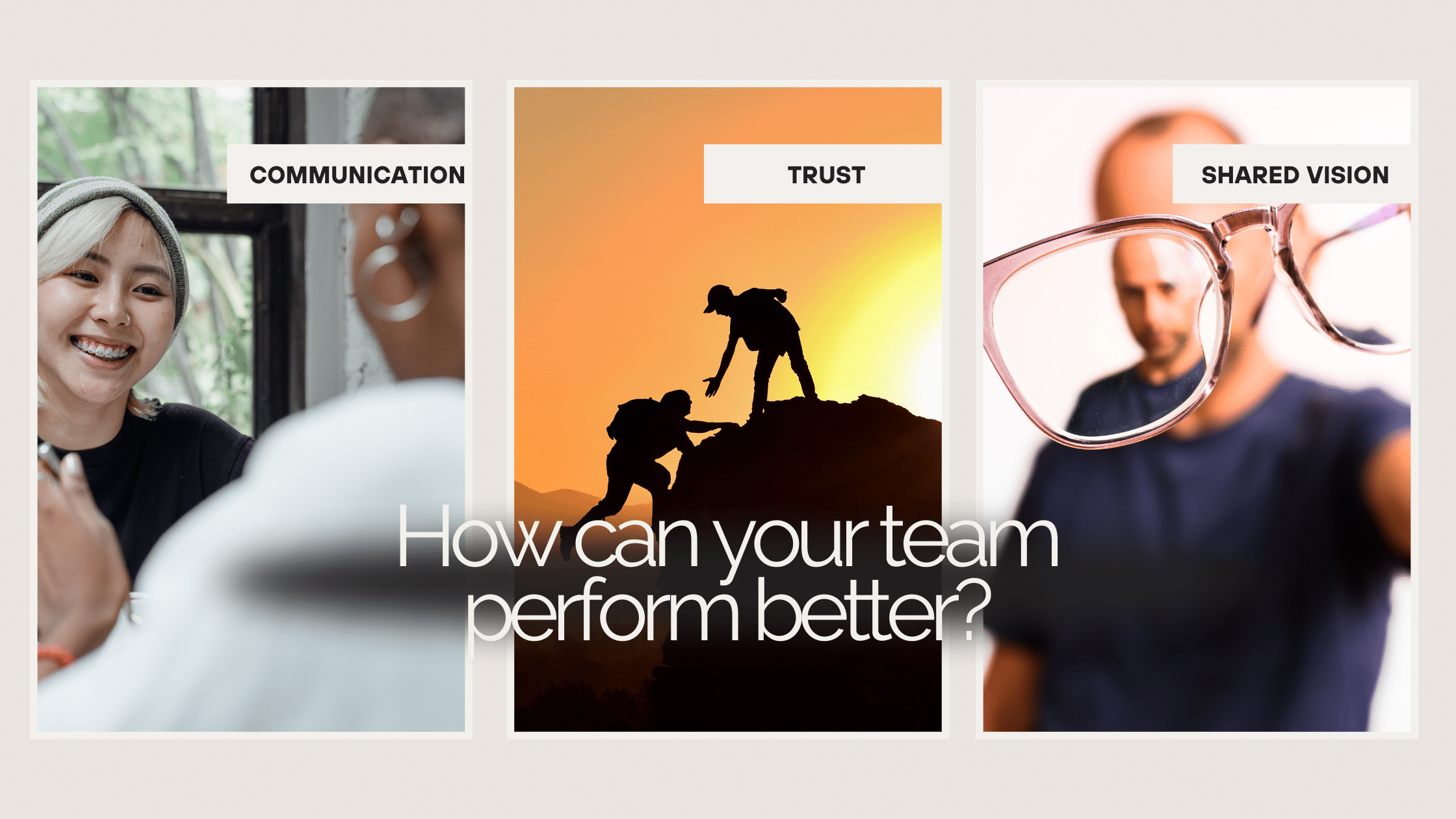
High perforning team. images illustrating communication, shared goals and trust

Three areas and one tool to focus on

What is a high performing team?

A high-performing team (HPT) is often described as a group of individuals who work together efficiently, effectively, and cohesively, towards a common goal. This type of team is characterized by mutual respect, trust, and an unwavering commitment to success.

While research shows that a team with a diversity of thought leads to greater innovation and creativity, it can also raise conflict and friction. I wanted to dive into this a bit deeper and explore the characteristics of high-performing teams and how they can be cultivated.

While much has been written, it seems there are three core areas to focus attention on to raise performance: clear communication, shared vision and alignment around goals, and trust.

1. Clear Communication

High performing teams are made up of individuals able to communicate clearly and effectively with one another. They listen actively, ask questions, and provide constructive feedback. As a team lead you could start by establishing (and role modelling) clear communication norms and protocols within the team, so team members are able to communicate their thoughts and ideas in a safe and supportive environment. To work this needs self-awareness as well as an awareness of others.  A two-pronged approach, we use CliftonStrengths, and explore cultural awareness using a cultural orientation framework, (see The Culture Map by Erin Meyer, or Coaching Across Cultures: New Tools for Leveraging National, Corporate and Professional Differences by Phillipe Rosinski) being careful to flag up the dangers of cultural stereotyping.

Central to communication are mature listening skills. And tuning into your own internal Listening Villain, and your own need for detail, and whether you like to think aloud or quietly for example, can affect how you are perceived and come across within your team. For example, some people learn by asking questions and it is their capacity to formulate questions to gather and process information that is their greatest strength. Yet in some places, this can be perceived as the questioner not understanding the issue at hand. In some cultures, students grow up having been taught not to challenge, or question, someone in a more senior position.  And so may remain silent when they don’t understand. Another’s silence might be because they are in deep reflection, examining contributions from others in minute detail. But this might be perceived as being disinterested in the problem, or even not understanding. When the fact is, they are totally engaged and absorbed.

Growing a team that can use coaching style questions, and develop a coaching habit, can facilitate deeper listening. And oftentimes, that means simply being quiet yourself.

2. Trust

Trust is the bedrock of any high performing team. Without trust, individuals are unable to work together effectively, take risks, or innovate. Trust is built over time through consistent behaviours and actions. Leaders can foster trust by creating a psychologically safe space and mutual understanding of what each person brings, but also needs to be their best. Much is written about trust and leadership (see Gallup’s Strengths-based leadership). One of the frameworks we like, and use is Lencioni who expressed trust in the form of this equation:

Trustworthiness = (Credibility + Reliability + Intimacy) ÷ Self-Orientation.

Credibility is related to what people say: the extent to which they demonstrate knowledge and understanding about their subject, speak with conviction and make us feel confident that they are in command of their subject matter and competent in applying their expertise.

Reliability is related to what people do: the extent to which they follow through on promises, meet deadlines, deliver against targets, achieve agreed quality standards and go the extra mile to ensure that they have completed their undertakings.

Intimacy is related to the safety and security we feel in a relationship: the extent to which confidentiality is maintained, the confidence we have in opening up more personal aspects of ourselves and our emotional concerns and the belief that our values will be respected.

These are explained as additive factors, that can all be torpedoed by the denominator, Self-orientation.

Self-orientation refers to a person’s focus. In particular, whether the other person’s focus is primarily on themselves or others. 

Facilitated discussions – either face to face or online – can help teams come to understand each others’ orientations and be aware of what is driving apparent self-interest. Again, CliftonStrengths can help with this dialogue.


“Trust is the bedrock of any high performing team. Without trust, individuals are unable to work together effectively, take risks, or innovate.” – Lencioni

3. Shared Vision and alignment around shared Goals

High performing teams are characterized by a shared sense of purpose. Each person on the team understands how their role contributes to the broader mission. Clarity around goals and objectives, and personal alignment with these goals helps create a sense of accountability and motivation to achieve success as a team. Having space, and a language, that enables each person to interrogate the vison and goals from their own perspective adds creativity and deepens the understanding of how they can contribute to meeting the goal.

Again, CliftonStrengths, a deep understanding of all the 34 themes, helps us appreciate how we each need the others to meet these shared goals. Equally, knowing areas of the team where there may be gaps, helps focus attention on possible blind spots.

“High-performing teams are made up of individuals who are not just committed to their own success, but to the success of their teammates as well.”

– Simon Sinek

CliftonStrengths - the number one tool to choose?

So where to start? We always start with Clifton Strengths. One of the challenges all teams face is people’s past experiences where blame and suspicion, perhaps with justification, have been the default positions for many who feel let down by organisations and people in whom they have invested their trust. For some people once trust is violated it can never be reinstated. While for others, understanding more about the incident that broke our trust or caused hurt. can help heal burning resentment and fury. Using CliftonStrengths alongside other tools and insights gained through facilitated deeper discussions and analysis promotesbetter conversations that helps grow personal alignment to goals and deepening trust.

Read more →