When confidence becomes a blindspot

self assurance

The Dark Side of CliftonStrengths® Self-Assurance  Self-Assurance is often admired. It lives deep inside the person who remains calm under pressure, trusts their judgement when others hesitate, and moves forward without needing constant validation. In uncertain situations, people with high Self-Assurance can be a…

Read more →

Blindspots in Restorative

blindspots

In this month's instalment of our Dark Side of Strengths series, we're exploring how Restorative can move from being a superpower to becoming exhausting. And never forget, of course, that your Restorative will show up differently to others’ based on your other leading CliftonStrengths. And if you’re curious how your Restorative might show up and frustrate others, read our white paper on conflict and communication.

Introduction to Restorative

The power of leveraging individual CliftonStrengths to enhance personal and professional success cannot be underestimated. However each CliftonStrength comes with their own set of blindspots. Triggered by discussions in recent workshops, I’m gong to focus on BLINDSPOTS, and to get started thought I’d start with Restorative, because a recent cohort of 126 participants 48% of participants had it in their Top 5. Imagine, in one session there was a whole room full of problem finders, fixers, and perfectionists! In this blog, we’ll explore the dynamics of CliftonStrengths and shed light on potential blindspots, specifically honing in on the Restorative strength. We’ll discuss examples of how Restorative blindspots may manifest and offer insights into partnering with other CliftonStrengths to create a HARMONIOUS and PRODUCTIVE approach. Afterall, Restorative is an executing theme. And bad team vibes would not lie well with it. Creating another problem.

It’s the strength that says:

“Let’s figure out what’s gone wrong – or not right – and fix it.”

Remember. Not every problem requires your intervention.

Understanding Restorative:

Restorative is a strength characterized by the ability to solve problems and find solutions, often thriving in crisis situations. Individuals with high Restorative talents possess a natural inclination to identify and fix problems, bringing a sense of order and resolution to chaos. While this strength is undoubtedly valuable, it can lead to blindspots when overemphasized or misapplied.

The gift of Restorative

  • While many people can identify that something is wrong, Restorative is motivated to do something about it. The gift of Restorative is transformation.

At its best, Restorative brings:

    • Problem-solving: quickly identifying causes rather than symptoms.
    • Resilience: remaining calm when others feel overwhelmed.
    • Improvement: finding ways to make things work better.
    • Practicality: focusing on solutions, not endless discussion.
    • Recovery: helping people, projects and teams get back on track.

I often see Restorative shine in engineering environments. People with Restorative are drawn to places that demand problem solving when a system fails, a process breaks, or maybe a customer escalates an issue.

Most people see disruption, but those with high Restorative see something worth investigating, understanding, and improving. It is the strength that sparks the question in your head:

“How do we make this better?“

Innately, you have the capability to restore confidence, rebuild trust, and solve difficult problems. The world, and every team, needs you.

But every strength has a shadow.

The dark side of Restorative

Responsibility

The challenge with your Restorative talent is that it triggers you  almost permanently to focus on what’s wrong. When your attention instinctively moves towards problems, it becomes easy to overlook what is already working. You could become the person who always sees the negative.

You can also easily become the person everyone brings their issues to. And soon you’re carrying a weight of problems, half of which were never yours to own. This blog was the first ‘dark side’ in the series, that started in 2023! So we’ve updated it and reworked it to identify 5 challenges. Which have you encountered? 

Challenge 1: Seeing problems everywhere

The gift of Restorative is noticing what needs attention. The downside is noticing it all the time.

    • You walk into a meeting and immediately see the process flaw.
    • You review a report and spot the risks.
    • You join a project and identify fifteen improvements before anyone has discussed what is already going well.

Others may see opportunities. You see vulnerabilities.

Over time this can create fatigue, both for you and the people around you.

Sometimes a team needs improvement. Sometimes they need encouragement.

The Jedi shift

Ask yourself:

“What is working well that we should preserve?”

Before identifying a problem, identify a success. Balance creates credibility.

And like many engineering teams, having a trouble shooting list, and recording the urgency level of addressing it and potential impact helps everyone know what could be done and what needs to be done.

Challenge 2: Becoming the team fixer

People quickly learn that Restorative means you are capable and can solve problems. The result? Every issue finds its way to you.

Before long, you become the unofficial troubleshooter for everyone else’s challenges. And while at first this feels rewarding, eventually it becomes tedious. Because the danger is that others start depending on your expertise rather than developing their own capability.

The result: You become indispensable. And exhausted.

Jedi shift

Move from solving to coaching. Instead of: “Here’s how I’d fix it.”

Try: “What options have you already considered?”

Helping others develop their own problem-solving capability creates far more long-term value. And boosts confidence among your colleagues.

Challenge 3: Fixing people who haven't asked for help

This is the fine line between helping and interfering.

This one catches many people by surprise. Restorative often sees potential. You can see exactly what would help a colleague, partner, or indeed friend move forward. And this can depend on your other top CliftonStrengths.

The problem? They may not want fixing. Or they may not be ready. If you find your Restorative is supported by a group of the blue, Relationship Building Domain themes, beware of this, and if you also have high Empathy, be doubly cautious!

Your good intentions can accidentally become unsolicited advice. And while your intention is that it feels supportive, on the receiving end, it may feel critical of them.

You are the one that is the listening ear for strained relations – your Harmony ‘supercharges’ the need to mend disagreements and restore calm. Your Empathy both attracts dissatisfied colleagues and also can over feel their pain.

Jedi shift

Remember: Awareness does not create permission. So before offering solutions, ask:

“Would you like me to listen or help you think through possible solutions?”

That small question can transform relationships and outcomes for both of you.

Challenge 4: Chasing perfection through continuous repair

When improvement becomes obsession to rival Maximiser. And if you have Restorative and Maximiser, seriously watch out for this.

Your Restorative talent is in the Executing Domain. It is driven to do things. And as a result. often struggles to leave things alone. Even when something is functioning adequately, you can see ways to improve it.

Then improve it again.

And again.

The danger is that projects never feel finished. There is always one more optimisation. One more adjustment. One more fix.

At some point improvement becomes a diminishing return.

Jedi shift

Ask: “Is this problem important or merely interesting?”

Not everything requires optimisation.

Sometimes “good enough” is genuinely good enough.

Challenge 5: Carrying other people's problems home

Restorative cares deeply about solving challenges. Unfortunately, the brain doesn’t always switch off. The conversation you had at 10am is still circulating at 10pm.  You replay the issue. Explore possible solutions. Run scenarios. Mentally troubleshoot.

The problem may belong to someone else.

The mental load doesn’t get the memo.

Jedi shift

Create deliberate closure rituals. Write down actions. Capture next steps. Park unresolved issues before finishing work.

Your brain doesn’t need to hold every problem overnight.

Remember… your job is not to fix everything

One of the biggest lessons for people with high Restorative is recognising that your value is not measured by the number of problems you solve.

You’re not responsible for repairing every broken system, process, relationship, or project around you.

    • Some issues belong to other people.
    • Some require patience rather than intervention.
    • Some are simply outside your control.

The goal is not to fix everything.

The goal is to bring your problem-solving gift where it adds the greatest value.

Wisdom is knowing which problems deserve your energy.

Reflection questions: a moment for honest inventory

Take time this week to consider:

    • Which problems am I carrying that don’t belong to me?
    • Where am I focusing on faults instead of strengths?
    • Who am I rescuing instead of coaching?
    • What am I trying to perfect that is already good enough?
    • What would happen if I solved one less problem this week?

Double jeopardy - two strengths are in their blindspot zones

twister

How might Restorative and Intellection cause each other a challenge?

Under pressure, this partnership can become focused on solving immediate problems, making longer-term thinking and deep analysis more difficult. If these themes are in your Top 10:

    • Develop reflective habits such as journaling.
    • Partner with people strong in Strategic or Context.
    • Seek intellectual discussion and fresh perspectives.
    • Use structured approaches to break down problems.
    • Engage diverse viewpoints to strengthen solutions.

Final thought

The world needs your Restorative talents. It needs people who can remain calm when systems fail, projects derail and challenges emerge. It needs people who can bring order to complexity and solutions to uncertainty. Leaders who remain calm in a crisis – at what ever level of seniority.

The true power of Restorative isn’t solving every problem. It’s choosing the right problems. The Jedi side of Restorative recognises that strength is not found in fixing everything. It’s found in knowing where your energy will create the greatest impact.

Because sometimes the most powerful solution is not repairing what’s broken.

It’s recognising that some things are strong enough already. And my Restorative heavy workshop? We worked together to help them see the power of choosing the problems to work on. 

Read more →

Maximizer: The dark side of striving for better (and how to lead with it)

Maximizer

Maximizer is one of the most deceptively simple CliftonStrengths. People often assume it’s about perfectionism. Tidiness. Gold stars. A sort of relentlessly upbeat “can’t we make this nicer?” energy. But for those high in Maximizer, it’s not cosmetic. It’s existential. For me it supercharges my other themes. It drives each of them harder. It’s the instinct…

Read more →

Consistency and blindspots

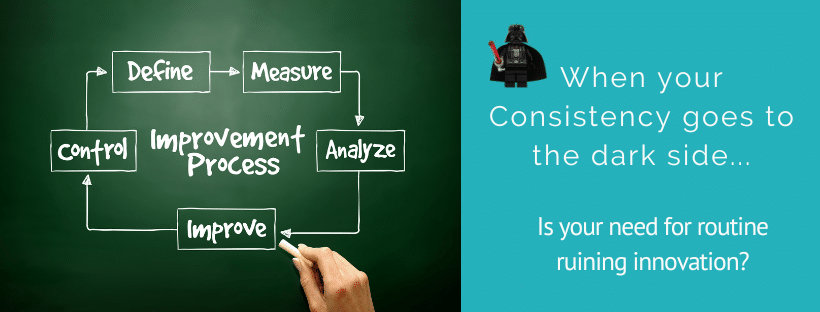
Blindpsot Consistency blog

Blindpsot Consistency blog

Navigating the Blindspots of Consistency

Exploring the Blindspots of Consistency in Engineering Teams: Strengths and Strategic Partnerships

 
In the world of engineering, the CliftonStrengths Consistency talent brings a critical perspective. Here we uncover the value of Consistency and its 5 potential blindspots. People with high Consistency value fairness, equality, and the establishment of stable processes. They tend not to like surprises, going to different holiday locations and prefer to find a rhythm to their life. They excel at creating dependable systems, ensuring everyone operates on a level playing field, and championing fairness in decision-making. However, like every strength, Consistency has potential blind spots. Understanding Consistency and its blindspots, and learning how to partner with complementary strengths can help engineers and their teams maximise their effectiveness. 


What is the Consistency Strength?

People high in the Consistency talent thrive in environments that demand structure and fairness. They naturally seek to establish processes that ensure resources, expectations, and opportunities are distributed equitably. In engineering, this can mean creating standard operating procedures (SOPs), ensuring compliance with safety regulations, or building workflows that avoid favouritism. Their focus on stability and fairness can improve team morale, reduce inefficiencies, and foster a sense of order within the chaos of technical work.

However, strengths overplayed or applied rigidly can create challenges with colleagues, clients or indeed close friends or family. Let’s explore some of the key blind spots of Consistency, particularly in the context of engineering, and identify the CliftonStrengths themes that can serve as valuable partners.

To explore more how to manage your interactions with other CliftonStrengths, read the Katalytik Whitepaper on Conflict and Communication and access our insights to how you can interact more effectively with some CliftonStrengths when you understand their drivers and style.


Blind Spot 1: Resistance to Flexibility in Unique Situations

People with high Consistency prefer structured systems that apply equally to all. While this is invaluable for establishing a sense of fairness, it can lead to a rigid approach when exceptions are necessary. In engineering, where projects often present unique challenges or rapidly changing requirements, an overemphasis on uniformity can stifle creativity and adaptability. For example, a one-size-fits-all approach to problem-solving might overlook the nuances of a particularly complex or urgent issue.

How to Address It:

To overcome this blind spot, individuals with Consistency can seek out teammates with Adaptability or Ideation. Those with Adaptability thrive in dynamic, fast-moving situations and can bring the flexibility needed when processes must bend to fit unique circumstances. Similarly, Ideation talent holders can help brainstorm creative solutions that fit the immediate needs of the problem while maintaining fairness in the broader system. And Strategic as a theme can offer insights and alternative ways of doing things.  

Practical Tip:

When faced with an exception, pause to assess its broader implications. Ask: Does this exception set a dangerous precedent, or is it a rare situation where deviation is justified?


Blind Spot 2: Perceived Lack of Empathy for Individual Needs

Consistency is often focused on the “big picture” of fairness, which can unintentionally overlook the unique circumstances or needs of individuals. In engineering teams, this might manifest as enforcing a rigid work schedule or workflow without fully considering personal challenges, such as someone’s need for flexible hours due to caregiving responsibilities. This perceived lack of empathy can create friction and lead to disengagement.

How to Address It:

Partnering with individuals high in Empathy or Individualisation can help bring a balanced perspective. Find a go to partner to have conversations that can help you explore this. Empathy talent holders are skilled at understanding others’ feelings and perspectives, which can help ensure that fairness doesn’t overshadow compassion. Meanwhile, Individualisation talent holders excel at tailoring solutions to fit the unique strengths and needs of each team member, creating a complementary approach to fairness.

Practical Tip:

Schedule regular one-on-one check-ins with team members to better understand their individual needs and how processes might accommodate them without compromising fairness.


Blind Spot 3: Slow Decision-Making in Ambiguous Situations

Consistency-driven individuals prefer clear rules and processes to guide their decisions. However, engineering projects often involve ambiguity and incomplete data. In such cases, the desire to wait until a system or rule is established can delay critical decision-making. This can frustrate teams that rely on agility and quick thinking, particularly in high-stakes situations like product launches or system failures.

How to Address It:

Partnering with someone high in Command or Activator can help mitigate this blind spot. Command talent holders excel at making decisive choices even in uncertain conditions, while Activators are adept at taking quick action to move projects forward. Together, they can complement Consistency’s preference for structure by bringing energy and urgency to decision-making.

Practical Tip:

When a decision needs to be made quickly, focus on the “minimum viable structure.” Define just enough process to guide the immediate decision without over-complicating or delaying action.


Blind Spot 4: Difficulty Embracing Innovation or Change

Consistency values stability, which can sometimes translate into resistance to change. While maintaining proven processes is often a strength, the fast-paced and evolving nature of engineering demands innovation. Over-reliance on the “way things have always been done” can hinder progress and leave teams lagging behind competitors who are more open to change.

How to Address It:

Team up with individuals who have Futuristic or Strategic talents. Futuristic talent holders are visionaries who can paint an inspiring picture of what the future could look like, helping the team see the benefits of change. Strategic, on the other hand, helps people excel at finding alternative pathways to achieve a goal, ensuring that the shift is both innovative and aligned with long-term objectives.

Practical Tip:

When faced with change, take time to map out how the new process aligns with the team’s core values and priorities. This can provide reassurance while allowing innovation to flourish.


Blind Spot 5: Overemphasis on Rules at the Expense of Relationships

In their pursuit of fairness, a rhythm or routine, people high in Consistency may come across as overly focused on the rules, potentially straining relationships within the team. For example, they might enforce policies in a way that feels impersonal, which can alienate colleagues who value a more relational or collaborative approach.

How to Address It:

Partnering with teammates who lead with Harmony or Relator can provide balance. Harmony talent holders excel at resolving conflict and fostering agreement, while Relator talent holders prioritise building close, genuine relationships. These complementary strengths can ensure that fairness doesn’t come at the cost of connection.

Practical Tip:

When enforcing rules, take time to explain the “why” behind them. Framing policies in terms of their benefit to the team or project can help build buy-in and trust.


Final Thoughts: Leveraging Partnerships to Maximise Consistency

The Consistency talent is a cornerstone of fairness and stability in engineering teams, but it’s not without its challenges. By recognising and addressing its blind spots, individuals with high Consistency can ensure their focus on equality doesn’t inadvertently hinder innovation, adaptability, or empathy.

Strategic partnerships with complementary strengths such as Adaptability, Empathy, Command, and Futuristic can help build a well-rounded approach to engineering challenges. Ultimately, it’s not about changing who you are but about leveraging your strengths in a way that maximises impact while maintaining balance. With thoughtful self-awareness and collaboration, the Consistency strength can help create engineering teams that are not only fair but also highly effective and innovative.


Read more →

Competition blindspots

a digital image of figures ina race

Unveiling the Blindspots of the CliftonStrength Competition theme and ideas how to address them The CliftonStrengths Competition theme drives performance and excellence. However, even the most positive traits can have their blind spots. In this article, we delve into the potential pitfalls of the…

Read more →

Command goes to the Dark Side

Blindpsot Command blog

Introduction Your Command gives you an energy and passion, that you wear as a cloak, and it’s possible you may not be aware of it. Be sure though, that others see it clearly. It brings a certainty and aura of confidence. The thing is…

Read more →